In S-21, there was a photograph of four boys. In the picture, the boys are of various ages, naked, and being held by soldiers. Our guide Sum shared with us that these are the four child survivors. In 1979 using a dirty laundry bin, the boys successfully escaped the prison. One of the boys pictured (second from right) is Norng Chan Phal. Both of his parents were killed in S-21, and yet he was able to escape. Now, Phal now comes to the prison each day to share his story of survival. We were able to meet him and bear witness to his story. It was beyond overwhelming for me. After going through this prison of death and destruction, torture and murder, it was incredible to meet Phal and hear from him his story of survival. Tears were flowing freely down as I listened to his story… He shared some of his memories he had with his brother in S-21. He also wanted us to know that although he endured this horrific trauma, he also has had many joys in his life: he got married; he has two beautiful children. He shared that he wants his two children to grow up in a Cambodia free from terror. Proudly, Phal shows the photograph of himself giving his testimony at the tribunal E.C.C.C. High ranking officials of the Khmer Rouge were charged with Grace Crimes Against Humanity going against the Geneva Convention. Here, Phal was able to confront Duch, the senior member of the KR and operational leader of S-21.
Thursday, February 27, 2020


S-21 and the Killing Fields
With the privilege of travel comes the responsibility to bear witness to the history of a place. Today our group visited S-21 and the Genocide Museum of the Killing Fields. I had read about the brutal reign of the Khmer Rouge, and I knew only that Pol Pot was behind the significant loss of life during that time. In reality, I was under-prepared to experience visiting these two sites. S-21 is right in the middle of Phnom Penh. An old high school, this campus was transformed into a horrific detention center and prison where over 14,000 were detained and killed. Each of the four buildings there had their own purpose, and what was once a place of learning became a site of mass killings. Some of the classrooms were turned into interogation and torture rooms. Each of these rooms had a bed with shackles and a chair and desk where the Khmer soldiers would torture the prisoners and then force them to submit a written confession. Some classrooms were sectioned off into multiple smaller individual cells. To walk through the buildings, we passed hundreds of photographs of prisoners, many of whom were children. The Khmer Rouge did not discern between adults and children, and their sick motto was “to kill the grass, you must remove the roots.” The torture devices: boyonetts, hatchets, hammers, were on display as well. Many of those detained were not shot so the soldiers could save their ammunition. Blunt head trauma, bayonette slitting of throats, or beheadings were most common. The photos of the piles of skulls were horrific, and I kept thinking to myself: this happened in my lifetime.
Working Women Build Communities
In preparation for the journey, I was researching socially responsible organizations in both Vietnam and Cambodia. The non-profit Mekong Quilts frequently came up in my research. I took note of this, but then stumbled upon this place unexpectedly today. After a tuk tuk ride that led me to a coffee shop I was unable to find, I found the Phnom Penh outpost of Mekong Quilts. Inside, I met Chetra, an artisan trainer who works with rural women teaching them paper mache art. Chetra shared with me the goals of Mekong Quilts: Micro-financing, educational scholarships, health and hygiene programs, and agricultural training. Starting in 2001, the organization currently employs over 200 women in both Vietnam and Cambodia. The success of Mekong Quilts has led to the creation of Mekong Plus+, an off-shot that also helps men, women, and children. This holistic approach allows entire families to find employment opportunities. The cool French university student who is volunteering there and all of the women were so cool: we chatted for an hour about the success and challenges of this non-profit. Gifts were purchased and programs supported. I hope this NGO continues to find success!

Morning in Phnom Penh’s Pigeon Park
Rous and I went for an early morning walk at 6am through the city streets. We passed by the monument to independence, the king Norstrom Sihonouk statue, and the monument to Cambodia and Vietnam’s peace treaty. Even early, the central park was filled with senior citizens doing tai chi. There was also a Cambodian dance group practicing their moves on the promenade. Rous and I joked that she is my personal trainer, getting my butt up at 5:45 to work out, but really it was a great opportunity to stretch the legs and explore. We saw the sun rise over the Mekong River, and then passed what I named “pigeon park,” an open plaza with hundreds (thousands?) of birds flying through the air. Although I usually write off pigeons as dirty city birds, I was entranced by their flight: moving as a group from one section of the park to another, with symmetry and grace. It was a beautiful way to start off my first full day in Cambodia.
Cambodia Days
Cambodia Day… The First 24 Hours
January 2020
From Saigon, we drove seven hours to Phnom Penh yesterday. The packed public bus had air conditioning and even spotty wifi. Heading west, we stopped every few hours at a gas station for a pretty dodgy bathroom break. Note to self: bathrooms that are located behind gas stations are never cool. And BYOTP: bring your own toilet paper. After a few hours, we made it to the border. There, we navigated a bizarre border crossings that seemed like part comedy sketch and part intelligence test in a different language. This included snoozing metal detector border agents, bus employees who “handled” the passport details, and immigration officials who were easily swayed by my emphatic declaration that I have an e-visa! Going through the immigration procedure, there were completely different experiences for each member of our group. Then, we enjoyed a strange lunch in a ghost town duty free limbo zone between two countries. Seeing 12 foot advertisements of blond haired male Lacoste models and displays for Rolex watches and Guess fragrances in an empty hall between Vietnam and Cambodia borders on bizarre. I did eye up the selection of boxed wine but fought any urge to participate in the nonsense there.
Once we crossed into Cambodia, it was evident that this country is more rural. We drove past uncultivated land for many miles. The infrastructure is also much more basic. The bridge (name i will look up) that crosses the Mekong was completed only four years ago. Rous, our guide, proudly raised this up as a significant stride in the progress of development of the nation’s roadways. The bridge, built by the Japanese, connects Cambodia’s eastern region to the west, a route that many people take going toward the capital.
The rural areas abruptly become urban city centers. Once in Phnom Penh, we became aware that serious traffic snarls this capital during rush hour. There are less motorbikes on the roadways, though. Although less densely populated, the roads in PP become clogged with cars, tuk tuks, and motorbikes. Unlike Saigon and Hanoi, the cars here are sleek, new Lexus SUVs, new Prius, Toyota CRVs... I asked Rous about this obvious display of wealth, she responded “the rich can buy whatever they want.” I am still curious: who has enough money to purchase a Lexus in Cambodia??
Wednesday, December 11, 2019
Hanoi's West Lake
West Lake, Hanoi

Hanoi, located in the north of Vietnam, is a city like no other. Charming buildings of French colonial
architecture, lakes that dot the cityscape, culinary influences from all over the world, and motorbikes
that fill the streets…. I have fallen for this burgeoning mega-city. I wander through the back alleys,
meander through side streets, find hidden cafes, traverse the hectic traffic roads because there are
no sidewalks, cars and motorbikes buzz dangerously close to me. I usually have a destination in mind:
explore a new neighborhood market, visit Ho Chi Minh’s mausoleum, try the delicious pho restaurant
suggested by a new pal… Imagine New York City on steroids, now set that city in 1931, add a dose of
Beijing in 1980. Color it with car and motorbike exhaust.

One of the lake’s of Hanoi is West Lake. In Vietnamese, it is Ho Tay, an enormous body of water
that essentially has it’s section of the city (the neighborhood is called Tay Ho). The lake creates an
idyllic setting and is protected by a gorgeous green-copper colored wrought iron gate with the symbol
of Hanoi in its center. For a Hanoi-beginner like me, the lake becomes the landmark for which direction
to travel how to get back “home.”
that essentially has it’s section of the city (the neighborhood is called Tay Ho). The lake creates an
idyllic setting and is protected by a gorgeous green-copper colored wrought iron gate with the symbol
of Hanoi in its center. For a Hanoi-beginner like me, the lake becomes the landmark for which direction
to travel how to get back “home.”

Biking around the lake is about 9 miles and takes about an hour. On the bike, I have a heightened
awareness of space as I share the road (more like the game the Fast and the Furious on the road)
with thousands of motorbikes and cars. Traffic rules do not apply here. At all. It is a thrill to be on a bike,
but the danger level is high: cars cut me off, motorbikes squeeze me out, and potholes need to be dodged
with quick reflexes.
awareness of space as I share the road (more like the game the Fast and the Furious on the road)
with thousands of motorbikes and cars. Traffic rules do not apply here. At all. It is a thrill to be on a bike,
but the danger level is high: cars cut me off, motorbikes squeeze me out, and potholes need to be dodged
with quick reflexes.

There are parts of West Lake that are more scenic and quiet. On these streets, there are tree-lined with
a variety of different species; some are flowering trees with small red buds, some are large willowy trees
with branches that hang low, and others have large palm fronds that reach high in the air. The greenery
adds to the lakeside beauty and tranquility.
a variety of different species; some are flowering trees with small red buds, some are large willowy trees
with branches that hang low, and others have large palm fronds that reach high in the air. The greenery
adds to the lakeside beauty and tranquility.

Always the adventurer, I have taken the inflatable kayak out on the lake a few times already. The
perspective from the water always offers a new vista. I kayaked up to some shrimpers in an old
fishing boat. Some middle aged men sat on a small pier casting a line next to the “no fishing” sign.
There are certainly fish to catch! A few jumped out of the lake and back in while I attempted to
cross the lake. I want to take the kayaks out for a night adventure, but I am too scared… night kayaking
in a huge city, what could go wrong?! I will keep you posted if I eventually try it!
perspective from the water always offers a new vista. I kayaked up to some shrimpers in an old
fishing boat. Some middle aged men sat on a small pier casting a line next to the “no fishing” sign.
There are certainly fish to catch! A few jumped out of the lake and back in while I attempted to
cross the lake. I want to take the kayaks out for a night adventure, but I am too scared… night kayaking
in a huge city, what could go wrong?! I will keep you posted if I eventually try it!

Lake life is slower paced than the downtown, or even the busy road Xuan Dieu that bisects the
neighborhood. In the morning, elderly Vietnamese men come out to the lake to exercise: They do
a variety of stretches and sets of leg and arm lifts. A number of people bike around the lake as well.
In the evening, the lake becomes a sort of “lovers lane” where young couples sit on the descending
steps and hold hands. Last night, there were groups of young folks who made a few bonfires and
sat around to enjoy the cool and clear evening.
neighborhood. In the morning, elderly Vietnamese men come out to the lake to exercise: They do
a variety of stretches and sets of leg and arm lifts. A number of people bike around the lake as well.
In the evening, the lake becomes a sort of “lovers lane” where young couples sit on the descending
steps and hold hands. Last night, there were groups of young folks who made a few bonfires and
sat around to enjoy the cool and clear evening.
Every morning, I have a view of the lake. From my window, I can gauge if there is a steady breeze
(which is a good sign!) or if there is stagnant air. If I can see across the lake to the downtown area,
I know the air pollution might not be too bad today. Often times, the other side is obscured by heavy
smog that lingers. Time to grab the mask… More on the air quality issues later. That topic deserves a
post in itself!
(which is a good sign!) or if there is stagnant air. If I can see across the lake to the downtown area,
I know the air pollution might not be too bad today. Often times, the other side is obscured by heavy
smog that lingers. Time to grab the mask… More on the air quality issues later. That topic deserves a
post in itself!

In his beautiful album “Ha Noi Eternelle,” author Renault-Hoang noted: “With its islets of verdure,
its lakes with lotus in their banks, its boulevards lined with tamarind and flame trees which cast their
appeasing shade on the facades of ancient colonial buildings, Ha Noi diffuses a subtle, discreet, even
secret and magic charm. One does not admire Ha Noi, one is not infatuated with the town for some time.
One is attached to Ha Noi.”
its lakes with lotus in their banks, its boulevards lined with tamarind and flame trees which cast their
appeasing shade on the facades of ancient colonial buildings, Ha Noi diffuses a subtle, discreet, even
secret and magic charm. One does not admire Ha Noi, one is not infatuated with the town for some time.
One is attached to Ha Noi.”
So that is it: With my heart strings, I am attached to Hanoi. This crazy city that radiates such intense
and beautiful energy: we are attached. Chúng tôi được đính kèm.
and beautiful energy: we are attached. Chúng tôi được đính kèm.
Tuesday, December 10, 2019
Getting Ready For Take Off!
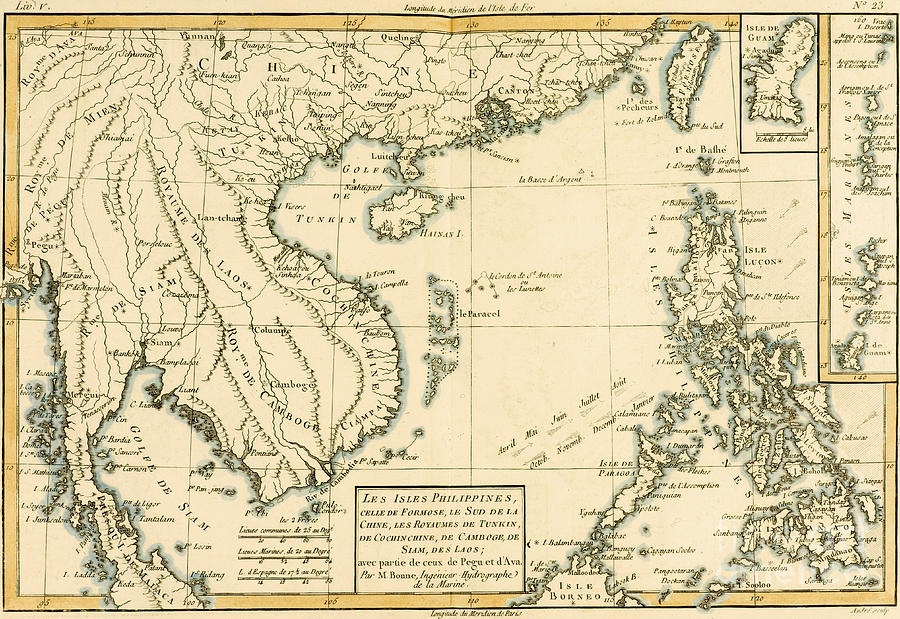
I have always loved maps.
Books filled with places with distinct names, islands that seem perfectly distant, detailed legends, and jagged coastlines. Thinking about the cartographer who created the map, I wonder what information was known at the time of design and how many details might have been left up to the creative imagination. Maps represent not only physical places, but also histories and peoples, groups that intersected and overlapped, and changes over time. Name changes, too: Once Siam, now Thailand; originally Ceylon, now Sri Lanka; Northern Rhodesia is now Zimbabwe... how places change and yet retain some characteristics of itself.
I found this antique map of Southeast Asia from 1780.
Subscribe to:
Comments (Atom)
Meeting The Boy Who Survived
In S-21, there was a photograph of four boys. In the picture, the boys are of various ages, naked, and being held by soldiers. Our guide...

-
Rous and I went for an early morning walk at 6am through the city streets. We passed by the monument to independence, the king Norstrom ...
-
In S-21, there was a photograph of four boys. In the picture, the boys are of various ages, naked, and being held by soldiers. Our guide...
-
With the privilege of travel comes the responsibility to bear witness to the history of a place. Today our group visited S-21 and the Ge...
